Korean four-pillar reading · 사주

You know your Kundli. Now meet your saju.

Saju is Korea’s thousand-year-old reading of the moment you were born. It isn’t a replacement for your Kundli. It’s a second lens from East Asia to read alongside it: four pillars for your nature, relationships, career, and the year ahead.

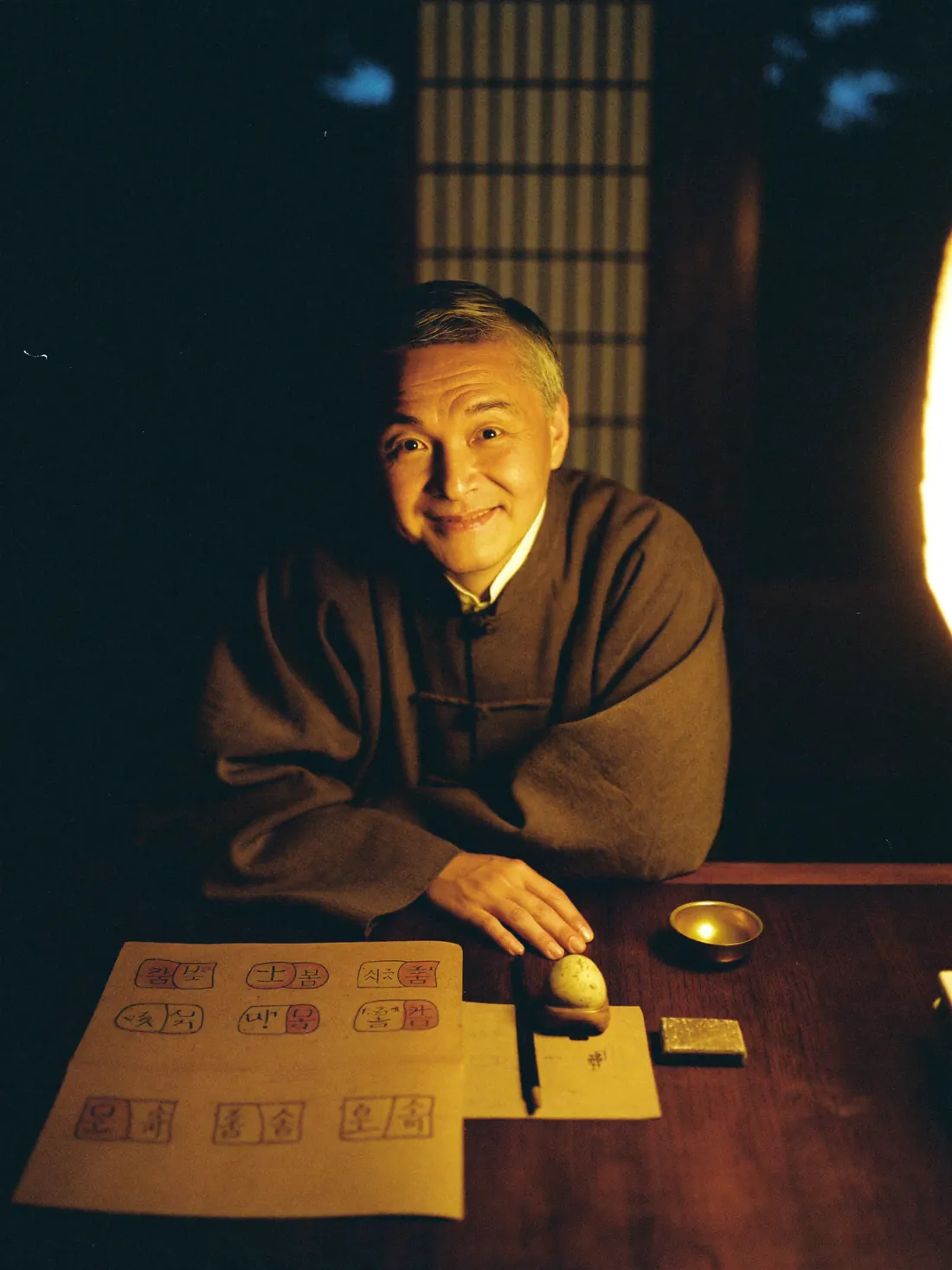
A smiling saju reader in a charcoal jacket at a lantern-lit table
Your guideKeeper of the saju table

Enter your birthday and watch the pillars turn.

Your guideCome in, sit down. Give me the day you were born and I’ll lay out the eight characters you’ve been carrying all along.

Have your exact birth time from your Kundli or birth certificate? Enter it and you get all four pillars. Without it, you still get three.

No sign-up needed. Your birth details are used only to prepare your reading, and you can ask us to delete them at any time.

  • 4 pillarsyear, month, day, hour
  • ₹99for the full report
  • 1,000+ yearsof practice in Korea

What is saju?

From your birth details to a second perspective

Your guidePeople walk in expecting a horoscope. Then they see their own four pillars on the table, and the questions change.

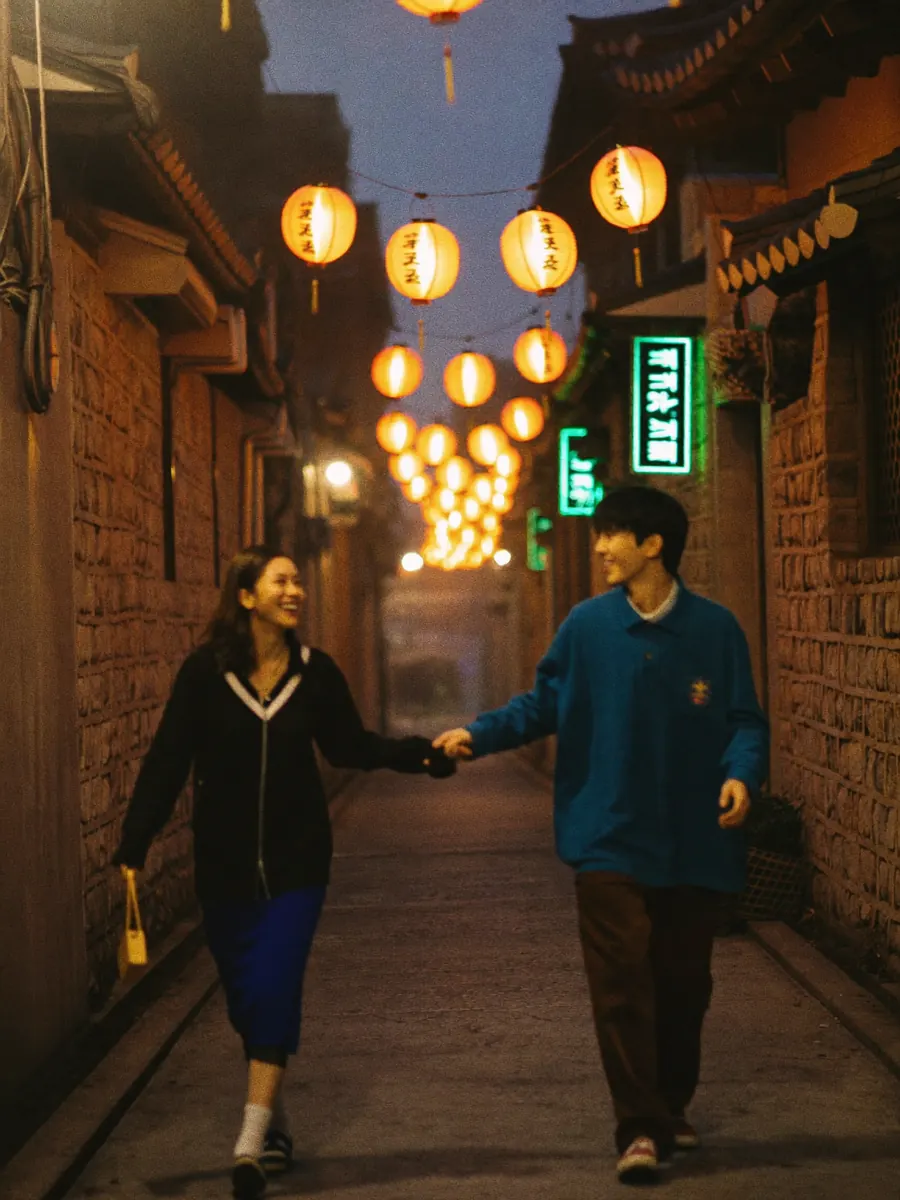
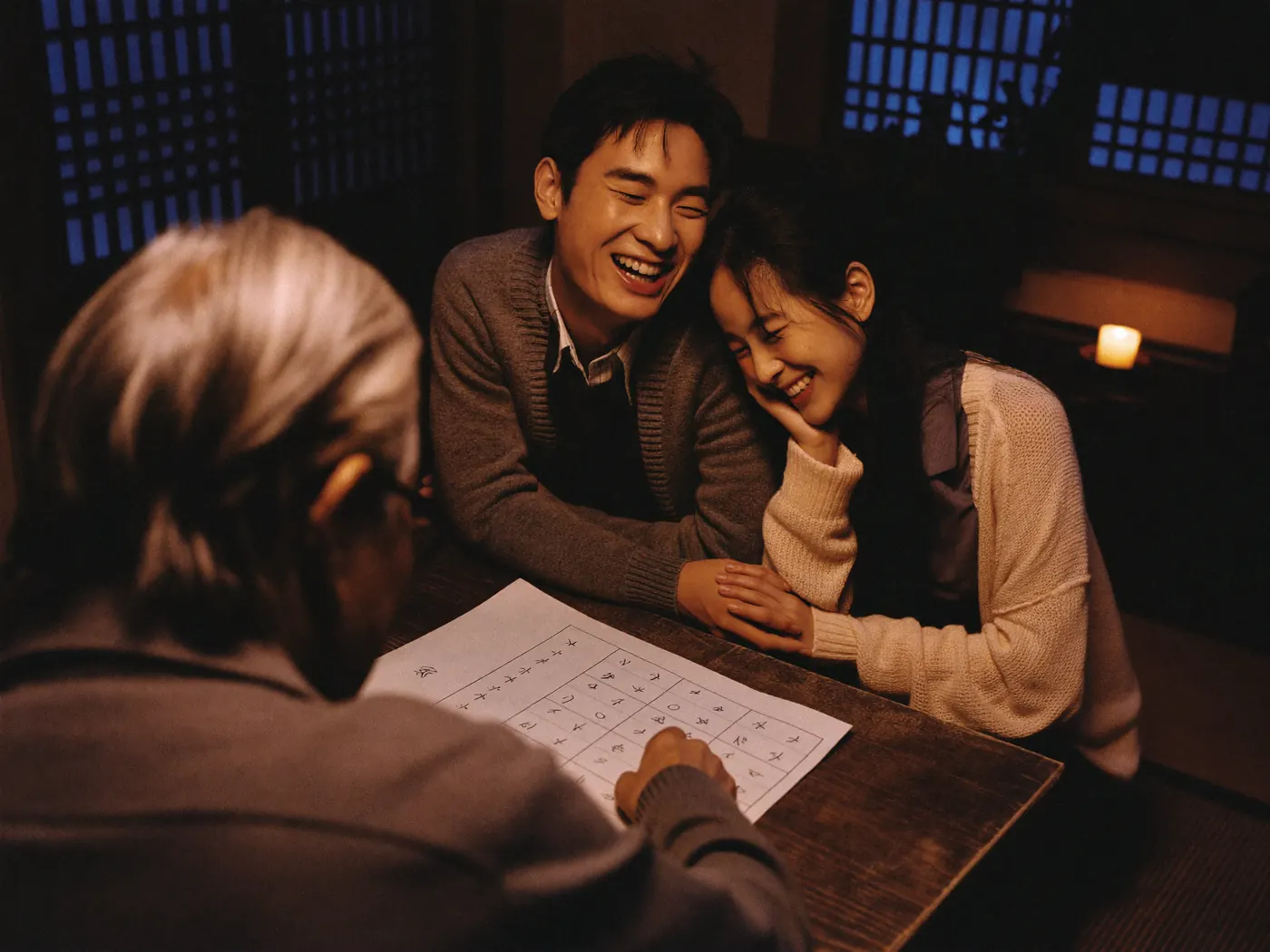
A couple laughing together over a hand-written saju chart at a low table
  1. 01

    The moment you were born

    The same details you gave for your Kundli: date, time, and place of birth. Saju writes them in a traditional 60-step calendar that Korea has used for over a thousand years. No planets are involved.

  2. 02

    Four pillars, five elements

    Year, month, day, and hour each become a “pillar” of two characters. The eight characters carry a mix of Wood, Fire, Earth, Metal, and Water. A different five from the pancha bhuta, and a different way of using them.

  3. 03

    Your nature and your timing

    Where a Kundli starts from your lagna and rashi, saju starts from your Day Master: the element of the day you were born. From there it reads your temperament and your ten-year cycles.

How it compares

Alongside your Kundli, not instead of it

Jyotish and saju grew up separately and look at different things. Reading both is a little like getting a second opinion from a different school of thought.

Korean saju and your Kundli

Both traditions take the exact birth moment seriously, and both care about timing in life. They measure different things, so they rarely say the same thing twice.

Reads from

Grahas against the sidereal zodiac and the nakshatras

The calendar alone: no grahas, no houses

The chart

Twelve houses, set by your lagna

Four pillars, eight characters

Core identity

Rashi and janma nakshatra

Day Master: the element of your birth day

Life timing

Vimshottari dasha

Daewoon: ten-year cycles, a distant cousin of dasha

Matching

Guna Milan, scored out of 36

Gunghap: how two charts’ elements support or clash

Birth details

Exact time and place are essential

Exact time and place give the full reading, and you most likely have them already

We’re not suggesting one is better, and saju is not a substitute for advice from your family astrologer. They are independent traditions, and many people enjoy reading both.


Saju vs. Western astrology

If you know your sun, moon, and rising, you’re already fluent in the idea. Saju just works from the calendar instead of the planets.

Reads from

Where the sun, moon, and planets were in the sky

The birth moment itself, written as year, month, day, and hour in a 60-step calendar

Building blocks

12 signs, 10 planets, 12 houses

4 pillars, 8 characters, 5 elements, yin and yang

How personal

1,728 sun–moon–rising combinations

518,400 possible four-pillar charts

No birth time?

You lose your rising sign and houses

You keep three of four pillars, including your Day Master

Timing

Transits and retrogrades

Ten-year chapters (daewoon) plus a yearly flow

In daily life

Horoscopes, memes, first-date small talk

Koreans check it before weddings, job changes, and naming a baby

Counts are simple combinatorics: 12 × 12 × 12 for sun, moon, and rising; 60 × 12 × 60 × 12 for the four pillars. A full astrological chart holds far more detail than three signs. This is only a like-for-like headline.

Korean saju vs. Chinese bazi

Same roots, same eight characters. What differs is how each culture lives with them.

Origin

Systematized in Song-dynasty China as the Ziping method

The same classical method, practiced in Korea for centuries and tested in Joseon-era state exams

Everyday use

Often paired with feng shui, date selection, and Zi Wei Dou Shu

New-year readings, saju cafés, and gunghap before marriage are ordinary life

Tone today

Tends to be more technical and forecast-driven

Leans conversational, closer to a personality type and a counseling session

Clock time

Practices vary by school

Many practitioners adjust for Korea’s roughly 30-minute gap between clock time and solar time

Key terms

Day Master (日主), Luck Pillars (大運)

Ilgan (日干), daewoon (大運), gunghap (宮合)

These are broad cultural tendencies, not rules. Good practitioners in both traditions vary widely.

Sample result

Here’s what a free reading looks like

This one belongs to an imaginary friend born on 14 March 1997, birth time not entered. Enter your own details above and this section becomes yours.

Saju Seoul Demo preview

You are

The Wildflower

乙木 · Yin Wood

Find yours at Saju Seoul
Every reading comes with a 9:16 card sized for Stories.

Your four pillars

Day pillar. This one is you. The top character is your Day Master, and the one beneath it speaks to close partnerships.

Hour pillar hidden. Enter your birth time to reveal it and complete all four pillars.

Five-element balance

  • Wood 49%
  • Fire 17%
  • Earth 17%
  • Metal 0%
  • Water 17%

Your year, in one line

A year to branch out. Say yes to the thing that scares you a little.

Saju Seoul readings are for entertainment and self-reflection only. They are not a substitute for medical, legal, or financial advice.

Your next reading

Your chart is open. What would you like to ask it next?

Every reading below is drawn from the same four pillars. Pick one, or pick a few: the more you pick, the less each one costs.

Your guideOne question rarely comes alone. Pick the ones on your mind tonight. The third one is nearly on the house.

  1. 1 reading₹99
  2. 2 readings₹79 each
  3. 3 or more₹59 each−40%

Nothing picked yet

One-time payment, nothing renews. Unlocked readings stay in your reading room, and Today’s Fortune is always free.

The five elements

Meet the cast

Everyone carries all five. Your chart shows which ones lead and which ones stay in the background. The colours come from obangsaek, Korea’s traditional five-colour palette.

Outer ring: the generating cycle (상생)Inner star: the controlling cycle (상극)

Tap an element to see what it feeds and what keeps it in check.

Wood · The Grower

Blue-green · East · Spring

Curious, idealistic, always reaching. Wood people start things and dislike being boxed in.

  • Wood burns, and Fire rises.
  • Water feeds the roots, and Wood grows.
  • Roots break up Earth.
  • Metal cuts Wood.

Two Day Masters share this element

  • The Great Tree Yang Wood

    Upright, steady, quietly ambitious. You grow in one direction: up.

  • The Wildflower Yin Wood

    Soft on the surface, impossible to uproot. You bend, adapt, and bloom anyway.

Fire · The Spark

Red · South · Summer

Expressive, warm, magnetic. Fire people light up a room and sometimes forget to rest.

  • Fire leaves ash, and ash becomes Earth.
  • Wood burns, and Fire rises.
  • Fire melts Metal.
  • Water puts out Fire.

Two Day Masters share this element

  • The Sun Yang Fire

    Warm, visible, generous. Rooms notice when you arrive.

  • The Diya Yin Fire

    A small flame that changes the whole room. Focused warmth, sharp intuition.

Earth · The Anchor

Yellow · Centre · Between seasons

Steady, loyal, practical. Earth people are the reason the family WhatsApp group still works.

  • Earth holds ore, and ore becomes Metal.
  • Fire leaves ash, and ash becomes Earth.
  • Earth dams Water.
  • Roots break up Earth.

Two Day Masters share this element

  • The Mountain Yang Earth

    Calm, wide, hard to move. People lean on you without asking first.

  • The Garden Yin Earth

    Fertile ground. Things, and people, tend to grow around you.

Metal · The Editor

White · West · Autumn

Principled, precise, clear-cut. Metal people know what they stand for and where the line is.

  • Metal gathers dew, and dew becomes Water.
  • Earth holds ore, and ore becomes Metal.
  • Metal cuts Wood.
  • Fire melts Metal.

Two Day Masters share this element

  • The Sword Yang Metal

    Direct, decisive, loyal. You would rather be honest than comfortable.

  • The Jewel Yin Metal

    Refined and exacting. You notice what everyone else missed.

Water · The Thinker

Black · North · Winter

Perceptive, flexible, deep. Water people read the room before anyone has spoken.

  • Water feeds the roots, and Wood grows.
  • Metal gathers dew, and dew becomes Water.
  • Water puts out Fire.
  • Earth dams Water.

Two Day Masters share this element

  • The Ocean Yang Water

    Big-picture, restless, deep. Ideas move through you like tides.

  • The Rain Yin Water

    Gentle, observant, quietly persistent. You nourish things without making noise.

Pricing

Start free. Go deeper for ₹99.

No card or UPI ID needed for the free preview. All prices in Indian rupees.

  • Free preview

    ₹0

    Meet your Day Master.

    • Your Day Master character
    • Five-element balance chart
    • Three personality keywords
    • Your year in one line
    • Shareable 9:16 card
    See my saju — free

    No account or payment details needed.

  • Monthly

    ₹299 per month

    For daily readers and matchmakers.

    • A short daily fortune
    • Unlimited compatibility (gunghap) readings
    • Month-by-month flow
    Start free, subscribe later

    Renews automatically at ₹299 every month until you cancel. With UPI AutoPay, you approve the mandate in your UPI app before any charge. Cancel anytime under Account → Subscription or from your UPI app. You keep access until the end of the period you paid for.

Pay with UPI Cards Net banking

You will always see the exact amount and renewal terms before you pay. See our refund policy.

FAQ

Fair questions

Is this a replacement for my Kundli?

No. Saju and Jyotish are separate traditions that look at different things. Think of saju as a second perspective from East Asia to read alongside your Kundli, the way you might enjoy both an Indian and a Korean take on the same story.

Will my saju match what my Kundli says?

Sometimes it will echo it and sometimes it won’t, because the two systems measure different things. Saju uses no grahas or houses, only the calendar. Where they agree, that’s interesting. Where they differ, that’s a good conversation.

Does saju have something like Guna Milan?

Yes. It’s called gunghap. Instead of scoring out of 36, it looks at how the elements in two charts support or strain each other. Korean families often check it before a wedding. Ours is meant for curiosity and conversation, not as a verdict on any match.

What if I’m not sure of my exact birth time?

You can still get a reading. Three of your four pillars, including your Day Master, come from the date alone. If you have the time from your Kundli or birth certificate, enter it for the hour pillar.

Why do you ask for birth place and gender?

Birth place lets us correct for time zone, which can shift the hour pillar. Gender is used in traditional saju for one calculation only: the direction of your ten-year cycles. Both are optional for the free preview.

How do you handle my birth data?

Your birth date, time, and place are treated as sensitive personal data. We collect them with your consent, use them only to prepare your reading, and don’t sell them. You can withdraw consent and ask for erasure at any time from the link in the footer.

How do I pay, and how do I cancel?

You can pay by UPI, card, or net banking. The full report is a one-time ₹99 payment with no renewal. The monthly plan renews at ₹299 until you cancel under Account → Subscription or revoke the mandate in your UPI app.

Can saju tell me about health, exams, or investments?

No, and we won’t pretend otherwise. Saju Seoul is for entertainment and self-reflection. For medical, legal, or financial decisions, please consult a qualified professional.

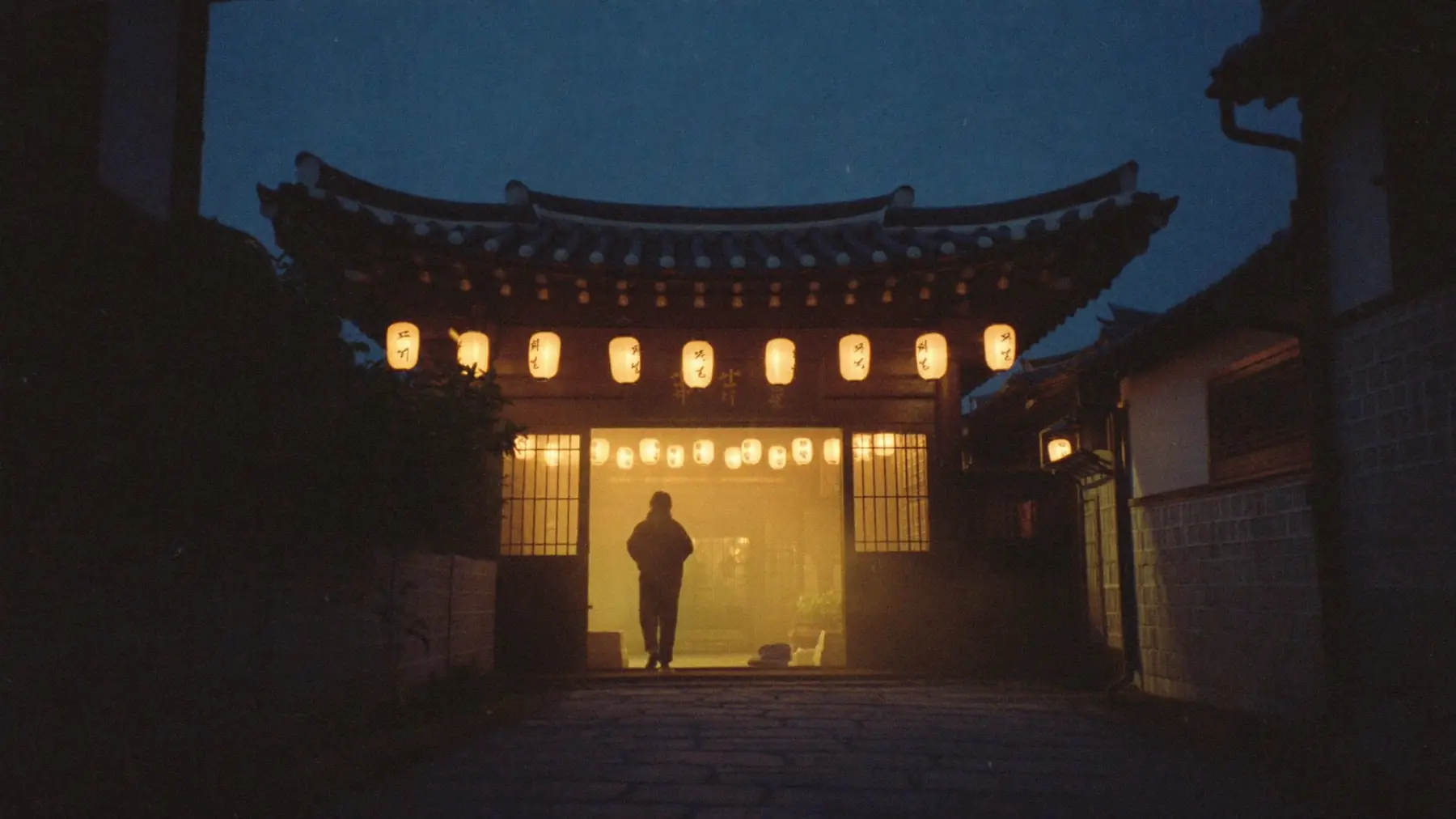
A lantern-lit hanok gate at night with warm light spilling out

One birth moment. Two traditions. Twice the conversation.

It takes about a minute, and the preview is free.

See my saju — free